
T Shirt Fabrics and Weights
Fabric decides how a t shirt feels, hangs, washes and lasts, and it is the largest part of its cost. We knit, dye and finish jersey, pique and rib for every kind of tee, from light summer basics to dense heavyweight bodies, and we help you choose the fabric that suits your product, your customer and your price.
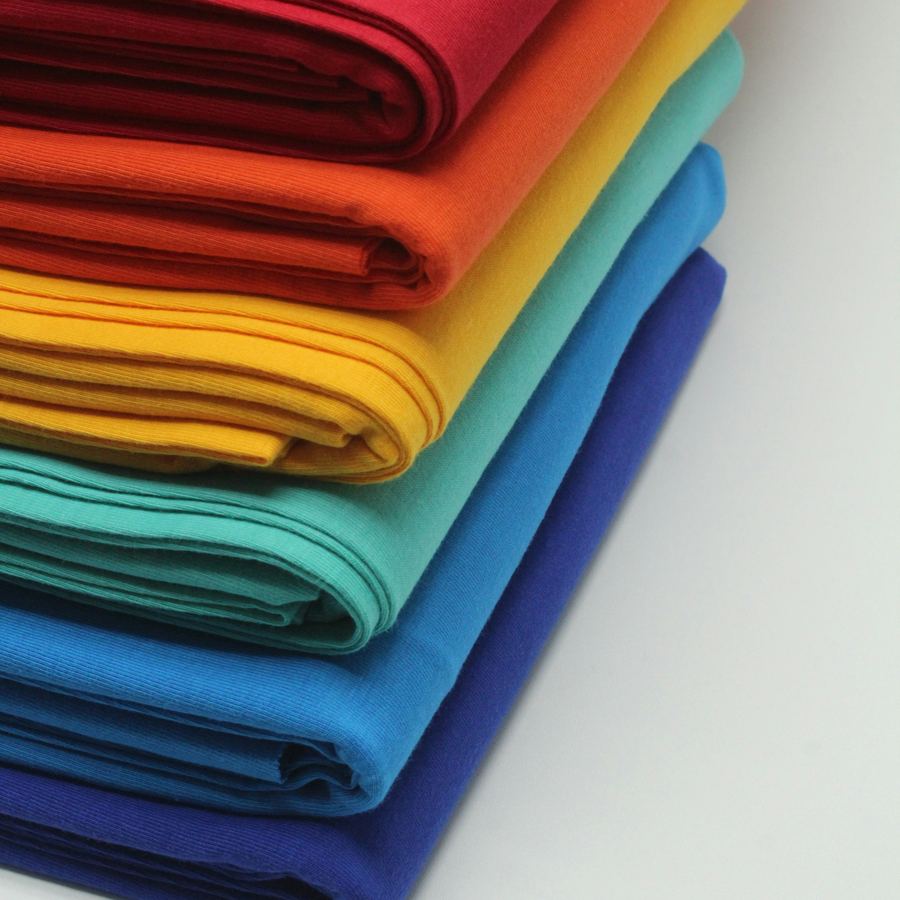
- Cotton
- Combed, carded and ring spun jersey
- Blends
- Cotton polyester, tri blend and cellulose blends
- Knits
- Jersey, pique, rib, slub and interlock
- Certified
- Organic and recycled fibers
- Weights
- Light summer tees to heavyweight bodies
- Colors
- Stock shades or matched to your standard
What is t shirt fabric made of?
Most t shirts are made of jersey, a single knit fabric that is smooth on the face and slightly looped on the back. Knitting rather than weaving gives jersey its natural stretch, which is why a t shirt moves with the body and recovers its shape. The fiber inside the yarn decides the rest: cotton for softness and breathability, polyester for strength and quick drying, and blends for a mix of both.
Two t shirts in the same fiber can still feel completely different. The way the cotton is spun, the thickness of the yarn, the tightness of the knit, the weight per square meter and the finishing after dyeing all change the hand feel and the drape. That is why we discuss fabric in detail with every buyer instead of offering a single standard cloth. Read what jersey fabric is for the full explanation.
Which t shirt fabric suits which product?
These are the fabrics we make t shirts from most often. Each can be produced in the weight and color your product needs.
| Fabric | How it feels | Best for |
|---|---|---|
| Combed cotton jersey | Smooth, soft and clean on the face | Premium basics, fashion tees and printed collections |
| Carded cotton jersey | Slightly more textured, sturdy and economical | Promotional, event and workwear tees |
| Ring spun cotton jersey | Soft with a fine, even surface | Retail basics and tees for screen printing |
| Organic cotton jersey | Soft and natural, backed by certificates | Sustainable collections and conscious brands |
| Cotton polyester blend | Soft, durable and shrinks less | Uniforms, teams and everyday wear |
| Tri blend | Very soft, light and slightly heathered | Fashion tees and merch with a vintage feel |
| Polyester performance knit | Light, quick drying and moisture wicking | Sports, running and training tees |
| Cotton with modal or viscose | Fluid, cool and silky | Women's tees and drapey fashion styles |
| Pique | Textured honeycomb knit, breathable | Polo shirts |
| Rib | Stretchy and close fitting | Necklines, tank tops and fitted tees |
| Slub jersey | Irregular texture with a casual look | Fashion and washed styles |
Read what the best fabric for t shirts is to compare them in depth.
Which weight should your t shirt be?
Fabric weight is measured in grams per square meter, or gsm. Heavier fabric feels denser and more opaque, lighter fabric feels cooler and drapes more.
| Weight | How it feels | Typical use |
|---|---|---|
| Around 140 to 160 gsm | Light, cool and soft | Summer tees, promotional runs and layering |
| Around 160 to 180 gsm | Balanced and versatile | Everyday basics and printed tees |
| Around 180 to 200 gsm | Substantial with good structure | Premium basics and retail collections |
| Around 200 to 240 gsm | Heavy, dense and opaque | Heavyweight tees and streetwear |
| 240 gsm and above | Very heavy with a boxy drape | Premium streetwear and oversized fits |
Read what gsm a t shirt should be for help choosing, or see our heavyweight t shirts.
What else changes how a t shirt fabric feels?
Beyond fiber and weight, these choices shape the hand feel, the look and the way a t shirt ages.
- Yarn count
- The thickness of the yarn. Finer yarns knit a smoother, lighter fabric, thicker yarns a sturdier and more textured one.
- Combing
- An extra step that removes short fibers before spinning, giving a smoother, stronger yarn that pills less.
- Ring spinning
- A spinning method that twists fibers tightly into a soft, even yarn.
- Compacting
- A finishing step that stabilizes the fabric, so the t shirt keeps its size after washing.
- Enzyme washing
- A treatment that removes surface fuzz for a cleaner face and a softer hand.
- Softening
- Finishes that give the fabric a smooth, silky or peached feel.
- Garment dyeing
- Dyeing the finished t shirt instead of the fabric, for a lived in look and a softer hand.
Which fabric is best for a t shirt?
There is no single best fabric, only the best fabric for a particular t shirt. For premium basics, combed or ring spun cotton jersey in a mid weight is the most popular choice, because it is soft, breathable, takes prints well and lasts. For streetwear, a dense heavyweight cotton gives the structure and boxy drape customers expect. For sports, a polyester performance knit dries quickly and stays light. For uniforms and teams, a cotton polyester blend keeps its shape and color through frequent washing.
Price matters too. Carded cotton keeps promotional and event tees affordable, while organic and recycled fibers add a certified sustainability story to a collection. We show you fabric options side by side, explain the difference in feel and cost, and make the sample in the fabric you choose, so you decide with the real garment in hand. For sustainable options, see our organic cotton t shirts.
How do we make sure the fabric is right?
Fabric is checked before a single panel is cut. We confirm the weight and width against the specification, test shrinkage and twist after washing, check color fastness to washing and rubbing, and compare every dye lot with your approved color standard. For printed orders, we test the print on the actual fabric before bulk production.
Where your order requires it, fabric, threads and trims are supplied tested to OEKO-TEX Standard 100, and certified organic or recycled fibers travel with their paperwork. See our certifications and standards for the full list. Because the fabric is knitted and dyed for your order, the same quality can be repeated exactly when you reorder.
Can you develop a fabric to our specification?
Yes. If you have a fabric you love, send a swatch or a garment and we develop a jersey that matches its weight, hand feel and look. If you are starting from scratch, describe the feel you want and we propose yarns, knits and finishes to reach it. Colors are matched to your physical standard or color reference, and you approve a lab dip before the fabric is dyed in bulk.
Once approved, the fabric specification is kept on file with your patterns and labels. That is how a best selling tee keeps the same feel and color season after season, and why so many brands trust us with the fabric behind their collections.
What do buyers ask about t shirt fabric?
What is the most common t shirt material?
Cotton jersey is the most common t shirt material, followed by cotton polyester blends and polyester performance knits.
Is combed cotton better than regular cotton?
Combed cotton is smoother, stronger and pills less, because short fibers are removed before spinning. It suits premium tees.
Which fabric shrinks least?
Blends with polyester shrink least. Cotton jersey is compacted and pre-shrunk in finishing to keep shrinkage low.
Can you make t shirts in recycled fabric?
Yes. Recycled cotton and recycled polyester blends are available, with the certificates to support the claim.
Can you match a fabric we already use?
Yes. Send a swatch or a garment and we develop a fabric that matches its weight, feel and look.
Can you match our brand colors?
Yes. Colors are matched to your standard, and you approve a lab dip before bulk dyeing.
Which fabric is best for printing?
Combed and ring spun cotton jersey give the smoothest surface for screen and digital printing.
Which fabric is best for sports tees?
Polyester performance knits are light, quick drying and moisture wicking, which suits sports and training.
Which types of t shirt material are there?
The main types of t shirt material are cotton jersey, organic and recycled cotton, cotton and polyester blends, triblends, modal and viscose, lyocell and performance polyester, each knitted as jersey, rib, pique or interlock.
Which material makes a thick t shirt?
A thick t shirt uses heavier jersey, usually from about 220 GSM upward, often in combed or ring spun cotton with a dense knit.
What is a t shirt neckband made of?
A t shirt neckband is usually a rib knit, often 1x1 or 2x2, in cotton with a little elastane for recovery, so the collar keeps its shape.
Tell us about the t shirts you want to make
A few lines are enough to start. Attach a tech pack, artwork or photos of a reference tee if you have them.
- We reply by email with questions or a written quotation.
- Your first sample is cut, sewn and decorated in 14 days once the details are fixed.
- Bulk fabric is cut only after you approve that sample.